
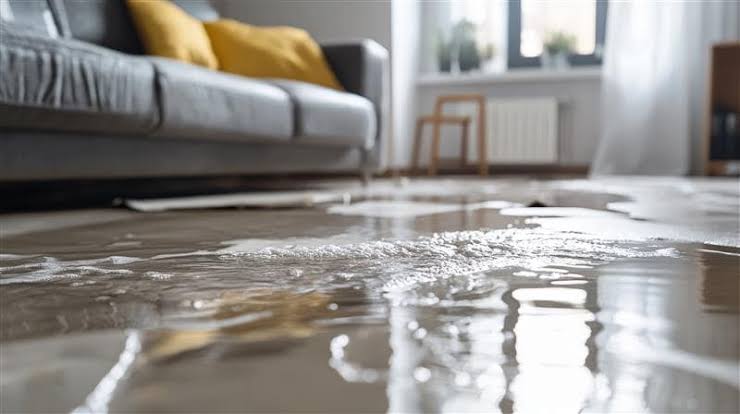
A supply line lets go behind a laundry wall on a Saturday morning. You find it Sunday. The subfloor is soaked, the drywall has darkened six inches up, and by Monday you’re holding three estimates that don’t resemble each other — one quoted over the phone in ninety seconds, one for $2,400, one for $6,800.
That spread is why water damage restoration cost feels impossible to pin down, and why homeowners assume someone is padding the bill. Usually no one is. They differ because they describe different scopes of work: equipment counts, drying days, and assumptions about what gets torn out versus dried in place. Two of those three numbers may be defensible. The trouble is that nothing on the page tells you which two.
The Insurance Information Institute reports that about one in 60 insured U.S. homes files a water damage or freezing claim each year. Most people price this work exactly once, under pressure, standing on a wet floor. Here’s what’s behind the number.
This article explains what you’re actually paying for, and why three estimates for the same loss can look nothing alike:
- Water category, square footage, and equipment days drive the number far more than room count
- A per-square-foot quote given over the phone can’t account for any of them
- Insured and out-of-pocket jobs are priced by two completely different mechanisms
Five Things That Move the Number:
Nobody in this business prices a job by the room. Five variables do the real work:
- Water category. The S500 standard from the IICRC sorts losses into clean, gray, and grossly contaminated black water. A supply line and a sewer backup can flood the same footage and produce wildly different invoices, because category drives disinfection, protective equipment, and how much material must go.
- Affected square footage. Not room size — how far the moisture went. Under baseboards, into wall cavities, past anything you can see.
- Equipment days. Air movers and dehumidifiers bill per unit, per day. Five drying days cost double two and a half — this is where estimates quietly diverge.
- Remove versus dry in place. Saturated pad, insulation, and paper-faced drywall come out; hardwood and framing can often be saved. Salvage costs more per day and far less in total.
- Dwell time. The EPA advises drying water-damaged materials within 24 to 48 hours to prevent mold. Miss that window and drying becomes remediation, and the water damage repair cost climbs with it.
What This Costs in a Central Indiana House:
Typical mitigation ranges
These figures cover mitigation only: extraction, equipment, monitoring, controlled demolition. Reconstruction is a separate estimate, often the bigger one.
- Bathroom or single-room overflow, clean water, caught fast: $1,000–$3,500
- Finished basement, carpet and pad removed: $3,500–$10,000
- Whole-floor loss, or contamination requiring extensive removal: $10,000–$25,000 and up
Why Indiana doesn’t match the national numbers:
National calculators miss us for reasons unrelated to labor rates. Most houses north of Indianapolis have a basement, so the finished-basement loss is our default, not our exception. And basements are hard to dry: no natural air exchange, and the surrounding soil keeps handing humidity back for days. Housing stock matters as much. A 1940s bungalow off College Avenue, plaster over plank subfloor, holds water far longer than a 2006 build in Westfield with paper-faced drywall. Same gallons, two different jobs, two different invoices. When you ask how much does water damage restoration cost, the honest answer starts with the age of your house.
Why a Phone Quote Doesn’t Hold Up:
A water damage restoration cost per square foot figure quoted sight-unseen is a guess dressed as a price. Square footage says nothing about contamination, material type, or how far the water traveled. A real assessment produces three things: dated moisture and thermal readings on affected and adjacent materials, a category and class determination under S500 with equipment counts and projected drying days, and a written scope separating mitigation from reconstruction. Without all three, you’re comparing guesses.
Why Insured Estimates Look Alike and Out-of-Pocket Ones Don’t:
That $2,400-versus-$6,800 spread has a mechanical explanation. Most mitigation estimates in this country aren’t priced by the contractor at all. They’re written in Xactimate — the estimating platform most North American carriers and adjusters work in — which prices line by line from a regional database keyed to your ZIP code. On an insured job, your contractor and the adjuster read off the same list.
That’s why insured bids land in a narrow band, and why a contractor who writes in Xactimate is handing you numbers a third party has to approve. Pay out of pocket and none of that applies. The contractor sets the number, and the spread widens immediately. Know which situation you’re in before you start comparing.
What Your Policy Covers, and What It Won’t:
Standard policies cover sudden, accidental discharge — a burst supply line, a failed water heater. Flooding needs separate coverage through Female’s National Flood Insurance Program, and gradual damage from an unaddressed leak is excluded outright. Water claims are routinely denied for one reason above all others: the adjuster decided the damage was gradual, not sudden. Which is why documentation isn’t paperwork. Dated readings and a daily drying log are the proof that every equipment day earned its place. Either way, you absorb the deductible and any code upgrades.
How Long Does Water Damage Restoration Take?
Three to five days is the honest median for residential drying. It’s also a number that shows up in marketing copy more often than in moisture logs. How long does water damage restoration take in your house depends on:
- Material density — plaster, hardwood, and concrete give up moisture slowly
- Whether water reached wall cavities or subfloor layers
- Humidity, equipment capacity, and whether category escalation forces more removal mid-job
Anyone who commits to a completion date before reading a meter is selling a schedule, not a plan.
What a Fair, Itemized Estimate Should List:
Ask for line items — extraction and labor hours, each equipment unit per day, demolition and disposal, antimicrobial application, and monitoring visits with documented readings.
Per-day billing rewards leaving the fans running one more day. Flat-rate bidding rewards pulling them early. Neither incentive is pointed at you, and moisture logs are the only thing that settles it.
And price gaps between companies are frequently legitimate. IICRC-certified technicians and crews that return at set intervals to record readings cost more to field than an outfit that drops equipment on day one and collects it on day five.
Two extra dehumidifier days might add a couple hundred dollars to your invoice; missing the window and turning a $4,000 dry-out into mold remediation adds several thousand. That arithmetic is the case against the lowest bid — and the difference between real water damage restoration and equipment rental with a receipt.
FAQs:
Q1. Does a lower bid mean a better deal?
Sometimes. Check equipment days and monitoring visits first — cheap bids buy shorter drying, and pulling equipment early is how small losses become mold jobs.
Q2. Will filing a claim raise my premium?
It can. Weigh the estimate against your deductible; a single-room clean-water loss is often cheaper to absorb than to claim.
Q3. Do I have to use the contractor my insurer recommends?
Usually not. Carriers can suggest a preferred vendor, and there are real advantages to using one, but choosing the contractor is generally your call. Confirm the language in your policy before you commit.
Q4. Can I skip professional drying and use fans?
For a small clean-water spill caught within hours, sometimes. Anything that reached drywall, subfloor, or insulation needs metered proof it’s dry — a box fan can’t give you that.
Final Thoughts:
A fair water damage restoration cost isn’t the lowest number on the page. It’s the one you can trace back to specific equipment, hours, and readings somebody actually took. Ask for that breakdown and the comparison stops being guesswork.
If you’re holding estimates you can’t reconcile, a no-obligation on-site assessment is available anywhere in the North Indianapolis service area — and the same standard applies to any restoration and cleaning services estimate you’re handed.
Then ask each company one question: what will your moisture log show on day three? The ones who can answer it are the ones who went and looked.