

Most Claims Fail—Not Because You Lacked Coverage, But Because You Lacked Proof:
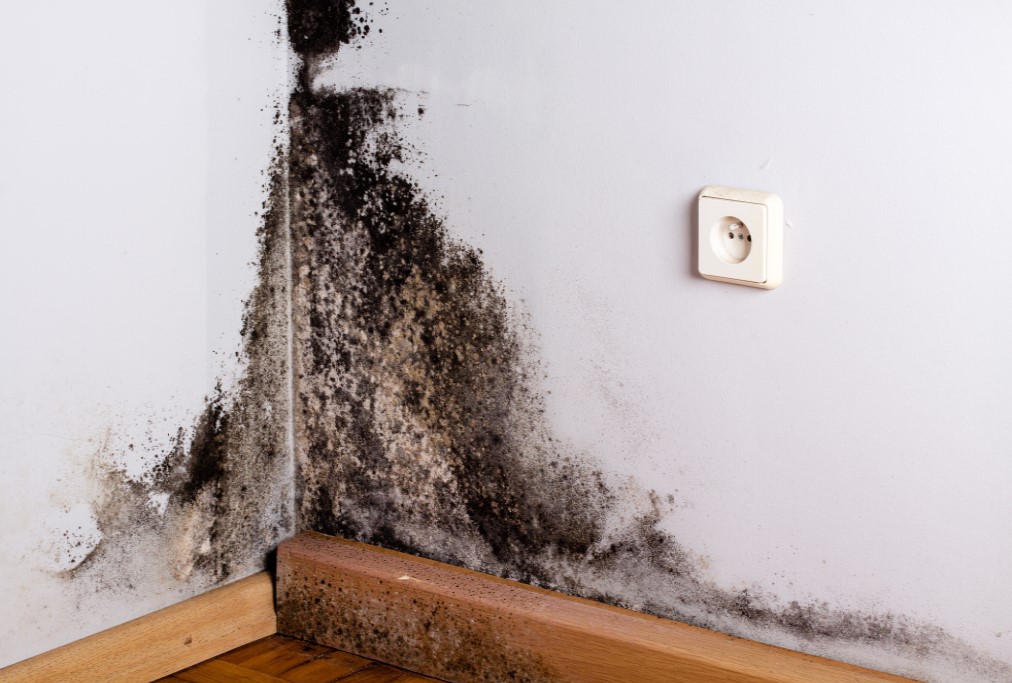
You find mold behind a wall. You call your insurer. They ask when the moisture started, how long it had been there, and whether the source was sudden. You don’t know the answers with certainty—and that uncertainty is exactly where most mold claims die.
This isn’t accidental. Standard homeowners policies around mold are written to shift the burden of proof onto you. If you can’t establish a documented timeline between a covered water event and the resulting mold, the claim gets denied—not because you weren’t covered, but because you couldn’t prove it. Understanding how a qualified mold removal service in northern Indiana documents its findings isn’t a nice-to-have. It’s the difference between a paid claim and an out-of-pocket bill.
Here’s what the policy language actually means—and where most homeowners lose ground they didn’t need to lose.
The Three Words Every Mold Claim Hinges On:
“Sudden and accidental.” That phrase appears in almost every standard HO-3 policy, and it does most of the work.
A pipe that bursts overnight and floods a finished basement qualifies. Mold developing within 72 hours of that event? The Insurance Information Institute confirms it’s typically covered as a downstream consequence of the water claim—the mold is treated as part of the event, not a separate condition.
That logic sounds clean until you see how quickly it unravels. The moment an adjuster finds any basis to suggest the water source was gradual—a slow drip, a failing caulk line, months of HVAC condensation—the threshold doesn’t apply. The claim doesn’t get reduced. It gets denied entirely.
The CDC documents that mold establishes itself within 24 to 48 hours of moisture exposure. Insurers use that same statistic to argue that visible mold indicates a problem predating the claimed event. Know this before you file.
The Coverage Limit Most People Find Out About Too Late:
Here is the detail that almost never appears in standard coverage explainers: even when mold is covered, most policies cap it. Typical sublimits run $5,000 to $10,000. A remediation involving contaminated drywall, HVAC infiltration, and subfloor material in a 1,500-square-foot home regularly cost $15,000 to $30,000.
Winning the coverage argument and still writing a significant check is not a hypothetical outcome. It happens routinely. Check your policy’s mold sublimit before you file—not after.
What Professional Remediation Actually Involves:
Mold remediation is not aggressive cleaning. A qualified mold remediation company working to IICRC S520 standards—the industry benchmark—identifies the moisture source, establishes physical containment to prevent spore migration, removes contaminated materials to clean the substrate, runs HEPA air filtration, and conducts independent post-remediation verification before issuing clearance.
That final verification step is the one most homeowners skip in partial DIY attempts. Without clearance documentation, there is nothing to submit to an insurer. Without documentation, the scope of the claim is unverifiable. A legitimate mold damage restoration service produces a paper trail from initial moisture mapping through final clearance—which is exactly the format adjusters need to process and approve a claim.
What Separates Approved Claims From Denied Ones:
The pattern is consistent. Homeowners who get coverage approved do three things. They call their insurer the same day they discover the water event—before cleanup, before any contractor, before any materials move. They photograph everything: the source, affected materials, visible mold, and any moisture readings they can access. And they bring in a professional for an assessment before removing anything, because a documented professional scope carries more weight with an adjuster than a homeowner estimate.
The denied claims almost always come down to one of two mistakes. Either the homeowner cleaned up what they could see, waited weeks, and called when mold appeared—making the original timeline impossible to establish. Or they removed damaged materials before the adjuster inspected, eliminating the physical evidence the claim depended on.
If mold has already developed and the cause is unclear, the restoration and cleaning services page covers what a complete professional assessment includes—the right first step before any conversation with an insurer, not the second.
FAQs:
Q1: How do I find the best mold removal company near me?
To find the best mold removal company near you, start by searching for licensed local mold remediation experts.
Check Google reviews, ratings, and recent customer feedback.
Choose a company with experience in both mold inspection and mold removal.
Make sure they identify the moisture source, not just clean visible mold.
Ask if they follow safe containment, air filtration, and removal procedures.
Look for proper insurance, trained technicians, and clear written estimates.
Avoid companies that promise instant results without a full inspection.
Ask whether they provide before-and-after photos or a final clearance check.
A reliable mold removal company should explain the process in simple terms.
They should also help prevent mold from coming back.
For the best results, choose a local mold remediation service (Steamatic) with strong reviews, honest pricing, and proven experience.
Q2: Mold was found during a home sale inspection. Is that covered?
No. Pre-existing conditions discovered during a sale fall entirely outside homeowners insurance. Remediation is a seller responsibility and a negotiation matter. A qualified mold removal service Indianapolis can document the scope and provide findings useful for renegotiating purchase terms, but no insurance claim applies.
Q3: What are the typical costs for mold remediation services?
Typical mold remediation costs range from $1,200 to $3,800 for many residential projects. Most mold removal companies charge around $10 to $25 per square foot. Small mold cleanup jobs may cost about $500 to $1,500. Medium-size mold remediation can range from $1,000 to $5,000, depending on the damage. Large or whole-home mold remediation may cost $10,000 to $30,000. The final price depends on the mold location, affected area, moisture source, and material damage. Mold inside walls, crawl spaces, attics, or HVAC systems usually costs more. Testing, air quality checks, drywall removal, and repairs may be billed separately. A trusted mold remediation company should provide a written estimate before work begins.
For the best value, compare local mold removal services based on experience, safety process, reviews, and clear pricing.
Final Thoughts:
Insurance covers the mold you can prove was caused by something they were already going to pay for. Everything else—slow leaks, long-standing moisture, and external flooding—is your financial problem unless you have supplemental coverage. That is a narrow window, and the homeowners who claim through it are the ones who treated documentation as their primary job from the moment water appeared.
If you’re already past that point, the priority is a professional assessment from a qualified mold removal northernindy specialist before anything else is disturbed—because what that assessment documents is the foundation everything else is built on.