
Your Dryer Has Been Telling You Something Is Wrong. You Just Haven’t Been Listening:
The load that used to dry in 45 minutes now takes an hour and ten. You rewash things because they come out damp. The laundry room runs warm. You’ve cleaned the lint trap—it’s always clean—so you’ve filed the whole thing under “dryer getting old.”
It isn’t getting old. It’s suffocating.
Lint bypasses the trap on every cycle and accumulates inside the duct itself, compounding quietly for months until airflow is partially or fully blocked. The U.S. Fire Administration documents approximately 2,900 dryer-related home fires annually, with failure to clean the vent as the leading cause. A professional dryer vent cleaning service near me doesn’t just reduce fire risk—it restores the operating conditions the appliance was built for, which changes how the machine performs, how long it lasts, and what it costs to run every month.
Here is what that actually looks like.
The Lint Trap Is a Filter for One Small Section of the Problem:
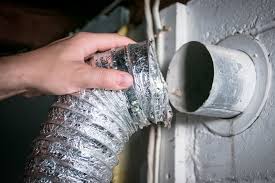
Cleaning the lint trap after every load is the correct habit. It is not vent maintenance. The trap captures a portion of what the drum produces. Finer particles and smaller fibers bypass the screen, enter the duct, and settle wherever airflow decelerates—at every bend, every transition from rigid to flexible duct, and at the exterior exhaust cap. Over months and years, that material compacts into a restriction that the lint trap never touches.
Think of it like the filter in a coffee maker. You clean it every time. The internal tubes and heating element still build up residue. The filter’s job is to catch what it can—it was never designed to keep the whole system clean.
A qualified dryer vent cleaning company cleans the entire duct path from the appliance connection to the exterior termination. Rotary brush systems and high-velocity air equipment reach compacted lint in sections physically inaccessible without professional tools. The exterior cap—which birds nest in, debris blocks, and ice can seal shut in an Indiana January—gets inspected and cleared. The airflow difference after service is immediate and measurable.
Restricted Airflow Runs Your Machine Into the Ground:
Here is what the dryer industry doesn’t advertise prominently: a dryer operating with restricted airflow runs hotter than its components were designed for. Heating elements, thermal fuses, and drive belts operate within tolerances defined by the manufacturer under normal airflow conditions. When airflow drops by 30 to 40 percent—realistic after 18 months of regular use without vent cleaning—those tolerances are exceeded on every cycle.
The Department of Energy estimates clean ventilation components reduce appliance energy consumption by up to 25 percent. For a household running seven to ten loads per week, that translates to $30 to $60 annually in energy savings—roughly the cost of the cleaning service itself, recovered within a year. What that figure doesn’t capture is the appliance lifespan extension. A heating element that fails at year four under restricted airflow conditions might have lasted to year eight under normal ones. That’s a $300 repair that didn’t happen, or an appliance replacement pushed back by four years.
For homeowners across the northern Indianapolis area, Steamatic of Northern Indianapolis provides dryer vent cleaning service northernindy including full duct inspection, professional cleaning, and exterior cap assessment with service documentation at completion.
Annual Is the Baseline—Several Factors Shorten It:
The NFPA’s annual inspection recommendation assumes average household use with standard fabric types. In practice, several conditions accelerate lint accumulation enough to make that interval inadequate.
Pet households generate finer, more compacted lint that restricts airflow faster than standard household lint. Families who regularly dry towels, bedding, and heavy cotton accumulate lint at a higher rate per cycle.
Duct configuration is the variable most homeowners underestimate—a run longer than 25 feet or with more than two 90-degree bends already operates at reduced capacity before any lint accumulates. If your configuration includes both, six-month intervals are more appropriate than annual ones.
The Math Makes This the Easiest Maintenance Decision in the House:
Professional dryer vent cleaning costs $100 to $175. A replacement heating element costs $200 to $400 installed. A new mid-range dryer costs $600 to $1,000. A house fire is not a line item—it is a category of loss.
What makes this calculation unusual is that the service sits at the bottom of the cost ladder and prevents everything above it. Most maintenance decisions involve genuine uncertainty about whether the larger cost would have materialized. Dryer vent fires are not low-probability events for people who don’t clean their vents. They are predictable consequences of a known condition. The uncertainty is not whether the risk exists—it’s how long before it does.
A reliable restoration cleaning company northern indiana professional resolves that uncertainty directly because the service costs less than the first item on the failure cascade it prevents.
FAQs:
Q1: What is the best vacuum attachment for dryer vent cleaning?
The best vacuum attachment for dryer vent cleaning is a long, flexible crevice hose attachment. It helps reach deep inside the dryer vent, lint trap, and narrow duct areas where regular vacuum tools cannot reach. A dryer vent cleaning kit with a flexible hose, lint brush, and vacuum adapter works best for most homes. For heavy lint buildup, a rotating brush attachment can loosen debris before vacuuming.
Choose an attachment that fits your vacuum, reaches several feet into the vent, and is safe for flexible or metal dryer ducts.
For best results, combine vacuum cleaning with a dryer vent brush to improve airflow, reduce fire risk, and help your dryer run more efficiently.
Q2: How do you clean the inside of a dryer vent?
To clean the inside of a dryer vent, first unplug the dryer and carefully pull it away from the wall. Disconnect the vent hose, then use a dryer vent brush or vacuum attachment to remove lint from the duct, hose, and dryer opening. Clean from both the indoor vent connection and the outside vent cover for better airflow. A flexible brush kit can help reach deeper into the vent line and loosen trapped lint.
After cleaning, reconnect the hose securely, plug the dryer back in, and run it on air-dry for a few minutes. Regular dryer vent cleaning helps prevent lint buildup, improves dryer efficiency, reduces drying time, and lowers fire risk.
Q3: Does dryer vent cleaning affect homeowners insurance?
Some policies require documented appliance maintenance as a condition of coverage for appliance-related fire claims. A professional cleaning produces a service record documenting the date, scope, and findings—the format most insurers recognize. The practical implication: a fire following four years of undocumented maintenance is a more complicated claim than one supported by annual service records showing reasonable precautions were taken.
Final Thoughts:
Nobody thinks about the dryer vent until the dryer stops working or something catches fire. That is precisely the pattern that makes this problem as common as it is. The service takes under an hour, costs less than a single appliance repair, and simultaneously addresses a fire risk, an energy drain, and a source of premature component failure.
No other home maintenance task delivers that ratio of effort to return. If you cannot remember the last time the vent was professionally cleaned—or if it has never been done—a dryer vent cleaning company visit is the most defensible hour of home maintenance on your calendar this year.