They Sound Like the Same Thing. They Are Not Even Close:
A pipe bursts. A professional arrives, runs equipment for a few hours, the standing water disappears, and you get a completion notice. Most homeowners believe the problem is handled.
Some find out three weeks later—when drywall shows dark stains or when a finished basement develops a smell that hits them the moment they walk downstairs—that what they received was half a service.
Water extraction is one step in a multi-phase process. Water damage restoration service is the complete process that extraction belongs to. Treating them as equivalent produces mold remediation invoices, structural repair bills, and insurance disputes nobody anticipated because the house looked fine after the water was gone.
Understanding where extraction ends and restoration begins is not technical knowledge for professionals. It is practical knowledge for anyone who owns a home.
Extraction Is the Opening Move—Not the Closing One:
Water extraction removes standing or pooled water using pumps, wet vacuums, and weighted extraction equipment. It is essential and time-sensitive—a flooded basement needs extraction within hours to limit how far water travels before saturation makes drying significantly more complex.
What extraction does not do is dry the structure.
After every visible drop is removed, substantial moisture remains absorbed into drywall, subfloor layers, wall insulation, and structural framing. These materials will not release moisture through suction — they require sustained, calibrated drying over days, with equipment matched to the specific volume of moisture and the materials holding it.
Stopping at extraction is not a partial solution. It is a delayed problem. The moisture left in wall cavities sits in precisely the warm, humid, organic conditions mold requires — and the EPA’s documented colonization window gives it 24 to 48 hours before removal becomes significantly more complicated and expensive.
What Restoration Does That Extraction Cannot:
A complete water damage clean up and restoration process follows the IICRC S500 standard—the industry’s technical benchmark—through moisture mapping, structural drying, antimicrobial treatment, and post-drying verification. The sequence is not arbitrary, and every step depends on the one before it.
Moisture mapping is where most homeowners would be genuinely surprised. Thermal imaging cameras read temperature differentials in walls and floors, identifying water that has traveled far beyond the visible damage area—inside wall cavities, beneath flooring, along structural framing. A finished basement that floods typically shows water migration 12 to 18 inches above the visible waterline inside the wall assembly. That moisture is invisible from the surface and actively creating conditions for structural damage and mold growth.
Without moisture mapping, drying equipment goes where damage looks worst. With it, equipment goes where moisture actually is. In most water events those are different locations—and equipment positioned in the wrong place produces readings that look like progress while the actual problem persists, untouched inside the wall.
A qualified Indianapolis water remediation company documents the entire sequence — original conditions, daily moisture readings at mapped locations, treatment records, and final verification confirming every mapped point reached target moisture content. That file is not an administrative routine. It is what determines how a claim resolves.
For homeowners in the Indianapolis area, Steamatic of Northern Indianapolis provides water damage restoration service northernindy covering the complete IICRC-aligned process from initial extraction through final verification, with documentation at every stage.
The Insurance Consequence Nobody Reads Until It’s Too Late:
Most standard homeowners policies cover sudden and accidental water damage and the full restoration it requires. What changes the outcome is the duty-to-mitigate provision in virtually every policy.
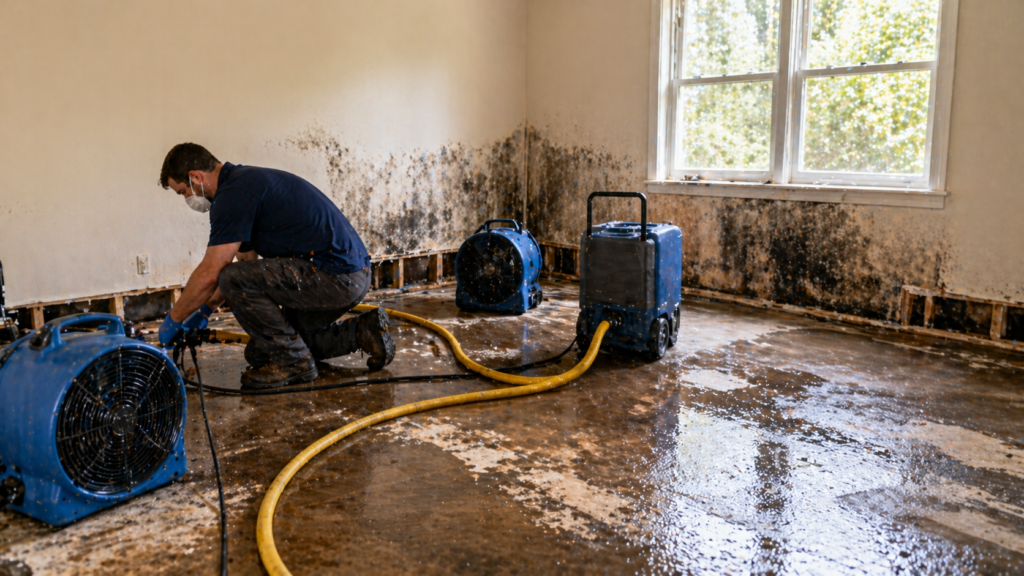
If an adjuster establishes that mold or structural deterioration developed after a water event and that the response stopped at extraction — leaving documented residual moisture in the structure — the insurer can attribute secondary damage to inadequate mitigation rather than the original loss. That argument moves remediation costs off the claim and onto the homeowner. It is a standard clause, routinely applied, and most homeowners encounter it for the first time while reading a denial letter.
Water damage repair northern Indiana professionals following IICRC protocols, produce daily drying logs with calibrated readings, moisture mapping records showing original conditions, and post-drying verification reports. An adjuster reviewing that file sees a professionally conducted, fully documented response. An adjuster reviewing an extraction receipt, followed by a mold remediation invoice three weeks later, sees a gap—and gaps in water damage claims resolve in the insurer’s favor.
The Category Assessment That Shapes Every Subsequent Decision:
Water removal services Indiana professionals classify water intrusion into three categories that determine every step following extraction. Category 1 is clean water supply lines, rainfall, and fresh appliance overflow. Category 2, grey water, includes washing machine discharge and toilet overflow without solid waste. It carries biological and chemical contamination requiring antimicrobial treatment alongside drying, not as an optional add-on. Category 3, black water, covers sewage backup and floodwater—requiring containment, protective equipment, specific material disposal, and extensive antimicrobial treatment throughout.
A water event that looks like Category 1 at the surface can involve Category 2 or 3 contamination in lower portions where water pooled longest. Professional assessment at the start establishes the actual category — which determines containment requirements, occupant safety protocols, material handling, and antimicrobial scope. Getting this wrong at the beginning compounds every step that follows and can expose occupants to contamination the cleanup was supposed to remove.
FAQs:
Q1: What should I do immediately after water damage occurs in my home?
After water damage occurs in your home, stop the water source immediately if it is safe. Turn off the main water supply for leaks, burst pipes, or overflowing appliances. Avoid standing water near electrical outlets, wiring, or appliances. Take clear photos and videos of the damage for insurance documentation.
Move furniture, rugs, and valuables away from wet areas when possible. Do not wait for the area to dry naturally, as hidden moisture can cause mold growth and structural damage. Call a professional water damage restoration company for water extraction, drying, moisture detection, and cleanup. Fast action can reduce repair costs, prevent mold, and help restore your home safely.
Q2: How do water damage restoration companies assess and price their services?
Water damage restoration companies assess the damage by inspecting the source of water, affected areas, moisture levels, and the type of materials impacted. They often use moisture meters, thermal imaging, and visual inspections to find hidden water behind walls, floors, and ceilings.
Pricing usually depends on the water category, size of the damaged area, drying time, equipment needed, and whether repairs or mold prevention are required. Emergency service, sewage cleanup, structural drying, and damaged flooring or drywall can increase the cost.
A reliable water damage restoration company should provide a clear inspection and written estimate and explain the cleanup process before work begins.
Q3: What is the difference between category 1, 2, and 3 water damage?
Category 1 is clean water from supply lines or rainfall. Category 2 carries biological contamination requiring antimicrobial treatment as a standard component, not an optional one. Category 3 requires physical containment, protective equipment, specific disposal protocols, and extensive antimicrobial treatment throughout. The category determines every subsequent decision — containment, occupant safety, material handling, and antimicrobial scope — which is why professional assessment at the start of a job affects everything that follows.
Final Thoughts:
Extraction handles the visible problem. Restoration handles the actual one. The gap between them is where mold grows, structural damage compounds, and insurance claims get disputed. For any property in northern Indiana facing an active water event, the question to ask the first professional you call is not “Can you remove the water?”
It is “Do you complete the full restoration process, with documentation, to IICRC standards?” The answer determines whether the water damage restoration service you hire solves the loss or simply delays the larger bill.