In July, Carmel firefighters were called to a garage full of smoke. No vehicle, no grill, nothing dramatic. The cause was batteries that had been left on the charger.
The department put it to residents plainly on Facebook: if you walked into your garage right now, would you find a drill, a trimmer, a blower, an e-bike or a scooter plugged in? Most of us would. Their advice was to walk the garage that night and unplug whatever had finished charging.
Tim Griffin, the department’s public information officer, put a number on it: he estimated at least half the garage fires Carmel crews worked over the past year involved chargers and battery-powered devices.
What doesn’t make the news is what comes next. The fire damage restoration carmel homeowners need after a battery fire isn’t the same job as after a kitchen fire, because a lithium-ion failure leaves a chemically different residue than burning wood and upholstery. Treating it like ordinary soot doesn’t just fall short. It can make the damage worse.
This article covers why a battery fire is a different cleanup job, and what to do in the first 48 hours:
- The residue is corrosive metal particulate, not carbon soot, and wiping spreads it
- Attached-garage air pathways carry it into rooms that never smelled smoke
- Keep the failed pack and charger; they matter to your claim and to any recall
Count What’s on a Charger Right Now:
Most Carmel and Fishers garages hold more of these than anyone guesses:
- Cordless tool packs, and the spare batteries on the shelf beside them
- Lawn equipment — mowers, trimmers, blowers
- E-bikes and scooters, the highest-energy packs in most homes short of an EV
- Robot vacuums, sitting on their docks around the clock
- Spare phone and laptop batteries in a drawer
Griffin named a specific culprit: aftermarket batteries and chargers bought to replace a failed original. A cheap third-party charger paired with a name-brand tool is the classic setup.
What Thermal Runaway Is, in Plain Terms:
A lithium-ion cell holds a lot of energy in a small space behind a very thin barrier. When that separator fails — from damage, a defect, overcharging, or heat — the cell starts generating more heat than it can shed. That heat pushes the neighboring cell into the same state, which pushes the next. The reaction feeds itself, and it supplies much of its own oxygen as the cell breaks down — so smothering it doesn’t work the way it does on a wood fire. That’s why these fires resist extinguishers, reignite hours later, and flare back up in a driveway after crews have left. Fire officials describe the warning signs as venting, hissing and popping — sometimes followed by a delayed explosion when gas that vented without igniting finds a spark. A swollen pack is a pack telling you something.
Why the Residue Is Corrosive, Not Just Sooty:
Now the chemistry, because it decides everything downstream.
The electrolyte in a lithium-ion cell contains fluorine-bearing salts, typically lithium hexafluorophosphate. Peer-reviewed work in Scientific Reports established that when these cells overheat and vent, they can emit hydrogen fluoride — a corrosive, acutely toxic gas.
Testing by Texas A&M’s TEEX on scooter-sized packs in thermal runaway found particulates loaded with metals, lithium most dominant, alongside toxic gases and volatile compounds. So what settles on your surfaces isn’t carbon soot. It’s fine metal particulate carrying acidic residue.
That changes everything about the response:
- It’s corrosive, not just dirty. On tool steel, vehicle trim, appliance housings and electrical contacts, this residue keeps working after the fire is out. Etching and pitting develop over days.
- Wiping spreads it. A damp cloth pushes fine particulates deeper into grain, seams and vents, and drags acidic film across surfaces that were clean.
- It reaches further than the burn. Particulate this fine goes wherever air goes, well past the visible damage.
One consequence worth naming, since it gets sold anyway: ozone and thermal fogging are deodorizers. They treat smell. They don’t remove metal particulates, and ozone is an oxidizer — the last thing you want introduced to metal already carrying acidic film.
A house that smells fine while the residue keeps working is a worse outcome than one that still smells like smoke. The most sobering data point comes from that same TEEX work. Even the established water-based protocol for cleaning firefighter gear removed about 99.2% of metallic particles, leaving measurable residue behind.
Against the heavier chemical compounds that come off with them, it performed anywhere from 21% to 92% depending on the compound. If a purpose-built decontamination process performs that unevenly, a garage rinse and a bottle of degreaser aren’t going to neutralize anything. Competent fire damage cleanup indianapolis work here means testing surfaces and selecting chemistry, not scrubbing harder.
When You Probably Don’t Need a Restoration Company:
Worth saying plainly, because nobody selling this service says it: most of these incidents don’t become restoration jobs. Griffin’s own framing was that there are thousands of these devices in the community and crews are seeing only a handful of failures. Carmel crews once worked a scooter fire where they pulled the device out of the garage before it involved the structure, and the result was smoke damage and not much else.
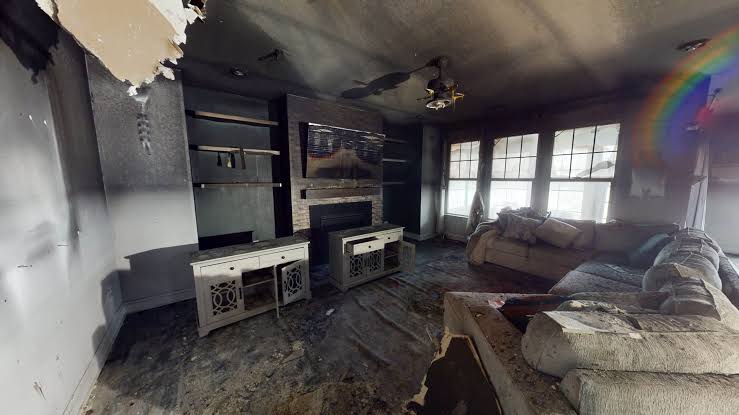
If the pack vented, someone got it outside quickly, and the fire never reached the walls or the ceiling, you’re likely looking at ventilation, a HEPA vacuum pass and careful cleaning of hard surfaces. Not a contract. What changes that: flame contact with the structure, residue on vehicles or tool steel, anything that reached a return vent, or a pack that burned rather than merely smoked. Those are chemistry problems. The rest is housekeeping, and you should be told which one you have before you’re quoted.
Why the HVAC System Is Not Optional:
Attached garages share more air pathways with living space than homeowners realize: through the ceiling, around the connecting door, and via returns and ductwork running near the garage.
Once fine particulate reaches a return, the blower distributes it and it settles in rooms that never smelled smoke.
Post-fire scope has to reach the air handler, coils and duct interiors rather than stopping at the garage wall. It’s also why smoke odor removal indianapolis crews attempt without addressing the system tends to fail: the source re-seeds the house every time the blower runs.
Run the system as little as possible until it’s been inspected.
Contents and Electronics:
Usually recoverable — hard goods, metal, glass, sealed surfaces, most textiles cleaned off-site, and many electronics if they weren’t running when contaminated and get treated before corrosion sets in.
Usually not — porous items that absorbed residue, anything already pitted, and electronics that kept running in a contaminated environment.
The variable is time. Acidic residue on a circuit board is an active process, so electronics triage in the first days determines what survives. Ask any provider quoting smoke damage restoration indianapolis work whether contents go off-site for treatment or get wiped in place.
Before Anything Moves:
- Photograph everything, wide and close, before cleanup or contents removal
- Keep the failed battery, the charger, and the device, bagged and outside. Your adjuster needs them, and so does any product-liability question later.
- Note the brand, model, purchase date and whether battery or charger was original
- Save receipts, including the replacement charger if there was one
Handing the burned pack to the hauler is the most common and most expensive mistake. It destroys the evidence for the claim and for any recovery from the manufacturer. One route most people never hear about: consumer product failures can be reported directly to the Consumer Product Safety Commission, which is how recalls get triggered in the first place. If an aftermarket charger took your garage, the report costs you nothing and may spare somebody else’s.
Tonight’s Checklist:
- Unplug what’s finished charging; don’t leave packs on chargers indefinitely
- Never charge across an exit path — a garage door, hallway or stairwell
- Use manufacturer or UL-certified chargers, not the cheapest online match
- Never charge a swollen, dented or damaged pack
- Store away from combustibles, and out of extreme heat and cold
Where the Batteries Go:
Never household trash, never curbside recycling. A crushed cell in a truck is how collection vehicles catch fire. Hamilton County residents can use the Household Hazardous Waste Center in Noblesville. Marion County residents can use the city’s ToxDrop program, free to residents at rotating Saturday sites — check the schedule before loading the car, since locations and dates have changed recently.
FAQs:
Q1. Can I clean it myself if the fire was small?
Cosmetically, yes. Chemically, no — corrosive residue keeps working on metal and electronics after the visible mess is gone.
Q2. Is the residue dangerous to my family?
Treat it as an irritant and keep children and pets out until it’s cleaned. Anyone with respiratory symptoms after exposure should see a doctor rather than self-diagnose.
Q3. The pack is smoking but hasn’t caught fire. What do I do?
Get everyone out and call 911. Don’t carry it through the house, don’t put water on it, and don’t assume it’s over if it stops — vented cells reignite, sometimes after crews have gone.
Q4. Will homeowners insurance cover it?
A sudden accidental fire is normally covered. The complication is scope — adjusters unfamiliar with battery chemistry may price it as a standard smoke loss, which is where documentation earns its keep.
Q5. How fast do I need to act?
Days, not weeks. Corrosion on metal and electronics is progressive, so the first 48 hours decide a lot — which is when most people start looking for fire damage restoration near me and when that search is actually worth making.
Final Thoughts:
An ordinary smoke loss is a cleaning problem. A battery fire is a chemistry problem that happens to involve smoke — and the difference decides whether your tools, your vehicle and your electronics come back.
If you’ve had one, get the residue identified before anyone wipes anything, and keep the pack. Competent fire damage restoration carmel work starts with knowing what actually burned, and the same holds for fire damage restoration indianapolis crews working an attached garage on the other side of 96th Street. Emergency response runs 24/7 across Carmel, Fishers, Noblesville, Westfield, Zionsville and North Indianapolis, and a proper fire restoration assessment covers the HVAC system and contents rather than stopping at the room — the same standard behind any restoration and cleaning scope worth paying for.
But the Carmel Fire Department had the better advice, and it’s free. Go walk your garage tonight and unplug whatever has finished charging. Two minutes, and it’s the only part of this you get to do before rather than after.