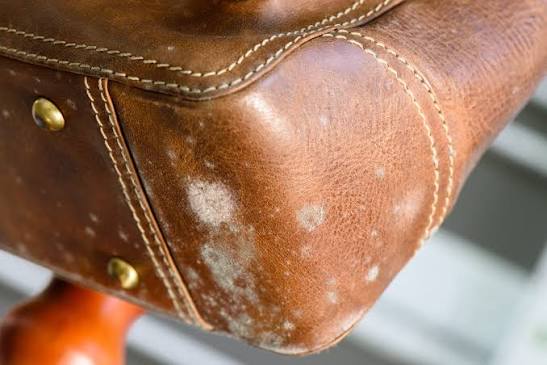
You usually smell it before you see it. Then you pull the jacket out and there it is along the shoulders and seams — a pale grey-green bloom that looks like dust until you get close and realize dust doesn’t grow in patterns.
On finished leather, that mold sits on the surface, not inside the hide. Most of it comes off in about fifteen minutes. The part nobody tells you is that it’ll be back by spring if you put the jacket back where it was.
Take it outside before you touch it:
Brushing mold off indoors does what it sounds like: lifts spores into the room you’re standing in and sets them down somewhere else. Carry the item outside, or into a garage with the door open.
Wear a mask if you have one. Not because a mildewed handbag is a health emergency, but because you’re about to aerosolize a cloud of spores at face height.
Dry first, then damp:
Brush the surface with a soft brush or dry microfiber cloth. Work with the grain, using less pressure than feels productive. Dry mold releases easily; wet mold smears into the finish and stains it.
Once the loose growth is gone, you can bring in moisture. A few drops of mild soap in warm water, a cloth wrung out until barely damp, one section at a time, then a second pass with plain water and a dry cloth behind it. Leather takes on water fast and gives it up slowly, which is the whole reason you’re in this situation.
Dry it in shade with air moving — never in direct sun, never near a heater. Heat is what turns a salvageable jacket into a stiff one. Once it’s fully dry, condition it — you just stripped oils along with the mold.
The smell is a separate job. On a jacket it usually lives in the lining rather than the hide, so it needs days of open air, not an afternoon. On an upholstered piece it’s in the foam, and surface cleaning never reaches it.
If it’s suede or nubuck, skip the soap and water — it marks the nap. Brush it out dry, then lift what’s left with a suede eraser.
About the rubbing alcohol advice:
Half the results you’ll find recommend a fifty-fifty mix of rubbing alcohol and water. It works: alcohol kills mold on contact, which soap and water don’t reliably do.
It also strips the protective topcoat, and that coating is what stands between the hide and every future spill. On a $40 pair of boots, that trade is probably worth it. On a good jacket or an upholstered chair, it isn’t. Soap, water, careful drying, and a change of storage get you there without spending the finish.
Why it came back:
Here’s the part that matters more than the technique. Mold on leather in central Indiana is almost never a cleaning problem. It’s a storage problem.
The one we run into most: a winter coat gets zipped into a garment bag in April, hung in the basement, and not opened again until October. That bag spent six months holding humid air against the leather. It was doing exactly what it was designed to do.
The rest of the usual suspects are just as ordinary. A closet built against an exterior wall. Boots on a concrete floor, which wicks moisture up through the slab whether or not the floor feels dry. The shoulder-season weeks in spring and fall when the air outside is heavy but nobody’s running the AC yet. The EPA’s threshold for indoor humidity is sixty percent, and leather held above that long enough will grow something.
So: off the concrete, out of the plastic, into a spot with airflow. A cheap hygrometer in the basement tells you more than any of this article does.
If you’re finding mold on several items, or in different rooms, the leather isn’t the problem — the building is. That’s the point where a mold remediation assessment is worth more than another round of scrubbing — otherwise you’ll be cleaning the same jacket every year.
The cleaning takes fifteen minutes. It’s the shelf you have to fix.